Categories
How To Make Money Online

Email List Building for Affiliate Marketers: The Subscriber-to-Commission System (Why Most Lists Never Make a Sale)

You did what everyone told you to do. You built a capture page, set up an autoresponder and started collecting emails. The subscriber count went up. Then you sent your first promotion… and nothing happened. No sales. A couple of clicks, maybe. And a quiet voice asking whether this whole “the money is in the list” idea was ever true.

It is true. But only half of it gets repeated. Email list building for affiliate marketers isn’t really about how many people you collect. It’s about who you collect, what you send them and the path you build from “new subscriber” to “first commission.” Most lists never make a sale because they were built like a numbers game instead of a system.

I learned that the slow way. Between 2023 and 2025 I nearly quit more than once, partly because I kept collecting leads without a real plan for turning them into buyers. The first course I ever took, Igor Kheifets’ eFarming Challenge, explained exactly how email turns into income, but a lot of it didn’t stick until later. Today that course is the foundation of my email marketing, and two lead sources, My Lead Gen Secret and Twice Confirmed Traffic, bring me around 20 front-end sales every month.

In this guide to email list building for affiliate marketers, you’ll get the full subscriber-to-commission system: how affiliate list building differs from regular list building, the four-part foundation, the traffic sources that actually build buyer lists, the emails that turn subscribers into commissions and how to protect your list so your emails keep landing in the inbox.

Before We Continue

If you’re building an email list to promote affiliate offers, you don’t have to figure it out alone. I share what’s working in my own business by email: the lead sources I’m testing, the follow-up emails that get clicks, deliverability lessons and honest notes on what flopped.

It’s short, practical and never pushy.

Click here to see how I turn new subscribers into affiliate commissions, one email at a time.

Email list building for affiliate marketers: the subscriber-to-commission system
Email list building for affiliate marketers: build buyers, not just subscribers.

Email List Building for Affiliate Marketers: The Short Answer

Email list building for affiliate marketers means collecting the email addresses of people interested in your niche, then sending them helpful emails that recommend products you earn a commission on. It works because most people don’t buy on their first visit, and an email list lets you follow up for weeks or months instead of losing them forever.

Why Affiliates Need an Email List More Than Anyone Else

As an affiliate, you don’t own the product, the sales page or the customer. The vendor does. If you send traffic straight to a sales page and the visitor doesn’t buy, they’re gone, and you’ve paid for that click with your time or your money.

Your email list is the only part of the business you truly own. Social reach is rented and can change overnight with an algorithm update. Search rankings move. An email list stays with you and travels with you from offer to offer.

The 4-Part Subscriber-to-Commission System

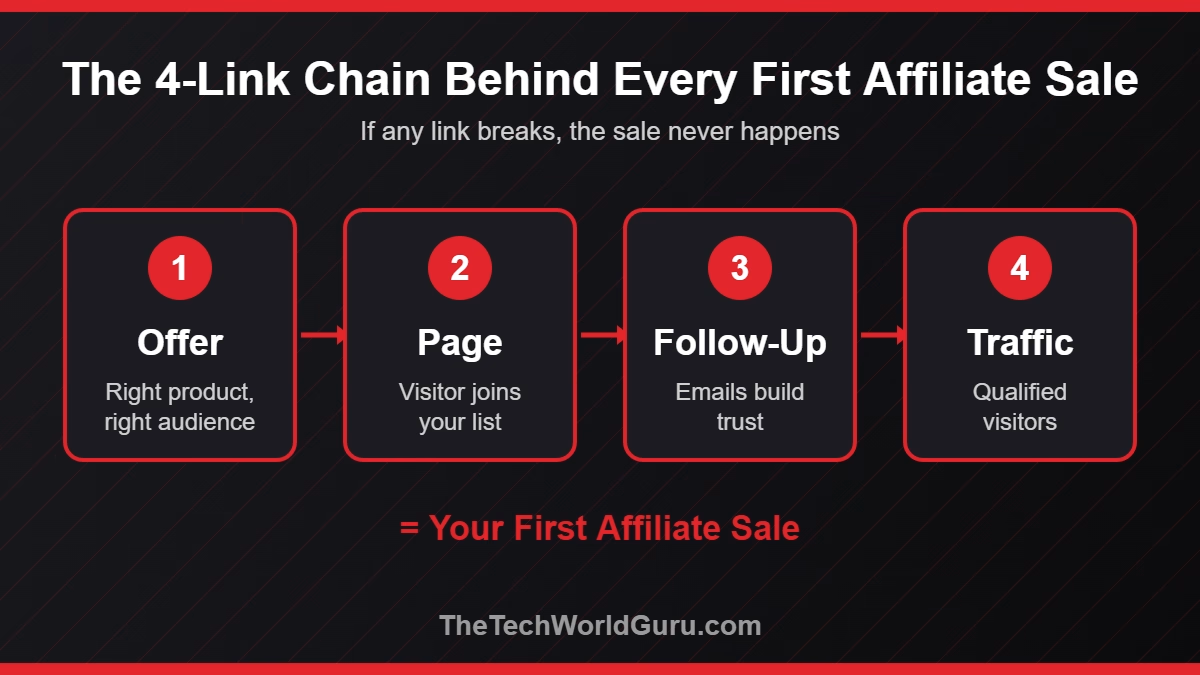
Every affiliate list that makes sales has the same four parts working together:

  1. Lead magnet: a free, useful gift that attracts the right people.
  2. Capture page: a simple page that trades the gift for an email address.
  3. Follow-up sequence: emails that build trust and recommend an offer.
  4. Offer: one relevant affiliate product your subscribers actually want.

If any one part is weak, the whole system leaks. Most lists that never make a sale are missing part three entirely.

How Email List Building for Affiliate Marketers Differs From Regular List Building

A blogger collecting newsletter subscribers and an affiliate marketer collecting buyers are playing different games. The tools look the same. The strategy doesn’t.

You’re Building Buyers, Not Just Subscribers

A big list feels like progress, but list size alone predicts almost nothing. What matters is buyer intent. A thousand people who downloaded a random freebie will usually earn less than a hundred people who raised their hand for a solution to a problem your offer solves.

That’s why email list building for affiliate marketers starts with the offer, not the freebie. Decide what you’ll promote first, then build a lead magnet that attracts people who’d want it.

Why Sending Traffic Straight to Sales Pages Loses Most of Your Commissions

When you send visitors straight to a vendor’s sales page, you get one shot. If they’re busy, skeptical or just not ready, the sale is lost, and so is any chance of a future sale. Capture their email first and you get dozens of chances to help them, build trust and recommend the right product when they’re ready.

The Bridge Page: Where Affiliate Lists Really Start

A bridge page sits between your traffic and the vendor’s offer. It introduces you, explains why you recommend the product and invites the visitor to join your list, often with a bonus. In email list building for affiliate marketers, the bridge page or capture page is the front door of the entire business.

Part 1: Build the Foundation (Lead Magnet, Capture Page, Autoresponder)

In email list building for affiliate marketers, the foundation takes a weekend, not a month. Get it right once, and every subscriber you add afterwards has a clear path to a commission.

Choose a Lead Magnet That Pre-Sells Your Offer

In email list building for affiliate marketers, the best lead magnets solve a small part of the same problem your offer solves. If you promote a traffic course, offer a short checklist of beginner traffic sources. If you promote an email marketing tool, offer five welcome email templates. The gift should create a quick win and naturally lead to the question your affiliate product answers.

Good lead magnet formats include:

  • A one-page checklist or cheat sheet
  • A short video walkthrough
  • A swipe file of templates
  • A mini case study showing real results

Capture Page Elements That Raise Opt-In Rates

A capture page has one job: get the email address. Keep it simple:

  • One clear headline that names the benefit
  • A short line explaining what they get
  • One form with as few fields as possible
  • One button with a specific call to action

In my own testing, custom capture pages have outperformed generic default pages on paid traffic. Small changes to the headline often make the biggest difference.

Single Opt-In vs. Double Opt-In for Affiliates

With single opt-in, subscribers join the moment they submit the form. With double opt-in, they must click a confirmation link first. Double opt-in usually gives you a smaller but cleaner list. Single opt-in gives you more subscribers and lets you send your first email immediately, but you’ll need to watch more closely for fake signups and inactive contacts. I use single opt-in and clean my list regularly.

Choosing an Autoresponder

An autoresponder stores your list and sends emails automatically. Popular choices for affiliate marketers include GetResponse, AWeber and LeadsLeap, which combines an autoresponder with a page builder and link tracker. Before you choose, check that the service allows affiliate marketing, because some providers restrict it.

Part 2: Traffic Sources That Build Affiliate Email Lists

Your foundation is ready. Now you need people. The right traffic source for email list building for affiliate marketers depends on your budget and how quickly you want results.

Lead Generation Services: My Lead Gen Secret and Twice Confirmed Traffic

Lead generation services deliver subscribers who have already shown interest in making money online, along with ready-made email swipes and pages. They’re the fastest way I’ve found to grow a buyer-focused list. My Lead Gen Secret and Twice Confirmed Traffic together bring me around 20 front-end sales every month, but that took testing, patience and consistent emailing.

Solo Ads: How to Test Vendors Without Burning Money

Solo ads are one of the oldest tools in email list building for affiliate marketers. A solo ad means paying another marketer to send an email to their list promoting your capture page. Quality varies widely, so treat every vendor as a test. Start small, track opt-ins and sales from each vendor, and only reorder from those who send real, engaged subscribers. Marketplaces such as Udimi show vendor ratings, but your own tracking matters more.

Free Traffic: Pinterest, Facebook, Blogging and SEO

Free traffic takes longer but keeps working. Pinterest pins can drive clicks for months. Facebook and LinkedIn build a personal brand and bring early subscribers. A blog with search-optimized posts grows slowly, then compounds. If you go the blogging route, read why my blog gets no traffic before you publish your first post.

Comparison: The Best Traffic Sources for Affiliate Email Lists

Traffic sourceSpeedCostLead qualityBest for
Lead generation servicesDaysPaid monthlyGood when emailed consistentlySteady, predictable list growth
Solo adsDaysPaid per clickVaries by vendorFast testing and scaling
PinterestWeeksFreeGood, search-drivenLong-lasting clicks
Facebook and LinkedInDays to weeksFreeWarm, relationship-basedPersonal brand and trust
Blog and SEOMonthsFree (time)High intentLong-term, compounding traffic

For a 30-day plan that combines these sources, see my guide on how to grow an email list fast.

Email list building for affiliate marketers: the 4-part system of lead magnet, capture page, follow-up emails and one offer
The 4-part email list building system for affiliate marketers.

Part 3: Turning Subscribers Into Affiliate Commissions

This is where most lists fail, and it’s the part of email list building for affiliate marketers that gets the least attention. Collecting emails is the easy part. Earning from them takes a plan for what you send and when.

The Welcome Sequence: Your First 7 Days

New subscribers are most interested in the first few days. Use that window well:

  1. Day 0: Deliver the lead magnet and tell them what to expect.
  2. Day 1: Share a short, honest story about your own journey.
  3. Day 2: Give one quick win they can use today.
  4. Day 3: Introduce your main affiliate offer and why you recommend it.
  5. Day 4: Answer the biggest objection.
  6. Day 5: Share a result, lesson or case study.
  7. Day 6: Give a clear reason to take action now, only if it’s true.

In my business, people who don’t buy keep receiving helpful follow-up emails for about 30 days, because many sales happen after the first week.

Story-Based Emails vs. Pitch Emails

The eFarming Challenge taught me a lesson I ignored for too long: interesting first, promotional second. An email that’s just a pitch gets deleted. An email that tells a story, shares an observation or challenges an assumption gets read, and the recommendation at the end feels like a natural next step instead of a sales push.

If your subscribers aren’t opening at all, read No Email Opens? 9 Hidden Reasons Your Subscribers Are Ignoring Your Emails.

How Often to Email Your Affiliate List

Consistency beats volume. Many affiliate marketers email daily, and I email my active list about once a day. If daily feels like too much, start with three emails a week. The bigger mistake is emailing so rarely that subscribers forget who you are, then wondering why the next promotion gets no response.

Segmenting Buyers From Non-Buyers

Segmentation is one of the most overlooked steps in email list building for affiliate marketers. Once someone buys, stop sending them the same pitch. Move buyers into their own sequence with onboarding help and related offers, and keep non-buyers in a follow-up sequence that answers objections. Segmenting by clicks and opens also helps you focus on people who are actually engaged.

Part 4: Protecting Your List (Deliverability, Bots and Compliance)

A list is only valuable if your emails reach the inbox. Protecting it is part of email list building for affiliate marketers, not an extra.

Gmail Deliverability Basics for Affiliates

Gmail and other inbox providers watch how people react to your emails. Low engagement and spam complaints push you toward the Promotions tab or spam folder. Google’s email sender guidelines require bulk senders to authenticate their domain with SPF, DKIM and DMARC, include easy unsubscribe options and keep spam complaints low. Asking subscribers to reply to your emails also helps, because replies are a strong positive signal.

Spotting Bot Signups and Cleaning Inactive Subscribers

Some traffic sources send fake or bot signups that open or click instantly and never buy. Bots inflate your numbers and hurt your sender reputation. Watch for signups with odd email addresses and clicks that happen within seconds of sending.

Clean your list regularly by removing people who haven’t opened in a few months. I once removed 148 inactive subscribers in a single cleanup. It felt painful to watch the number shrink, but a smaller, engaged list is worth more than a big, silent one.

CAN-SPAM, CASL and Affiliate Disclosures in Emails

If you email people in the United States, follow the CAN-SPAM Act: include a working unsubscribe link and your physical mailing address, and don’t use misleading subject lines. In Canada, Canada’s Anti-Spam Legislation (CASL) requires consent before you send commercial emails. When you recommend affiliate products, the FTC’s disclosure guidance says to clearly disclose that you may earn a commission.

Email list building for affiliate marketers: how to protect your list with authentication, list cleaning and compliance
Protect your affiliate email list: deliverability, list cleaning and compliance.

Common Email List Building Mistakes Affiliate Marketers Make

Most of the problems in email list building for affiliate marketers come from a few repeat mistakes.

Chasing List Size Instead of List Quality

A big number looks great in a screenshot. Engaged subscribers who open, click and buy are what pay the bills.

Collecting Emails but Never Emailing the List

If you only email when you have something to sell, every email feels like a pitch. Email regularly with value so the occasional recommendation is welcome.

Promoting a New Offer Every Day

Jumping from offer to offer confuses subscribers and burns trust. Pick one core offer and build your emails around it.

Switching Systems Every Few Weeks

This was my biggest mistake between 2023 and 2025. I kept buying new systems hoping one would do the work for me. Results came when I chose skills over systems and stuck with one list-building plan long enough to learn from it. If you’re still waiting on that first sale, my article Why Haven’t I Made My First Affiliate Sale? covers the other common causes.

How Long Does Email List Building for Affiliate Marketers Take?

It depends on your traffic source. With paid lead sources, you can add subscribers within days and sometimes see a first commission within weeks. With free traffic such as Pinterest or a blog, building a list that sells often takes several months. Either way, consistent emailing matters more than speed. For the full step-by-step path from zero to your first commission, read my affiliate marketing step by step guide.

Frequently Asked Questions About Email List Building for Affiliate Marketers

What is email list building for affiliate marketers?

Email list building for affiliate marketers means collecting email addresses from people interested in your niche, usually with a free lead magnet, then sending them helpful emails that recommend affiliate products. It lets you follow up with people who don’t buy on their first visit.

Do I need an email list to do affiliate marketing?

You can earn without one, but an email list makes affiliate marketing far more reliable. Most visitors don’t buy on their first visit, and a list lets you follow up for weeks or months instead of losing them.

How many subscribers do I need to make affiliate sales?

There’s no magic number. A small, engaged list that trusts you can outsell a large, cold one. Focus on attracting the right subscribers and emailing them consistently rather than chasing a specific list size.

What is the best lead magnet for affiliate marketers?

The best lead magnet solves a small part of the same problem your affiliate offer solves, such as a checklist, cheat sheet, short video or set of templates. It should give a quick win and lead naturally to your recommendation.

Which autoresponder is best for affiliate marketing?

Popular choices include GetResponse, AWeber and LeadsLeap. Whichever you choose, confirm it allows affiliate marketing, supports automated sequences and gives you open and click tracking.

What is the fastest way to start email list building for affiliate marketers?

Paid lead sources such as lead generation services and solo ads are usually fastest. Free traffic from Pinterest, social media and a blog takes longer but keeps working over time. Many affiliates combine both.

Products / Tools / Resources

These are the tools and training I personally use or have used for email list building for affiliate marketers. Some links are affiliate links, so I may earn a commission if you buy, at no extra cost to you.

1. Max Organic Traffic

Best for: building a free, long-term traffic source for your capture pages.

Max Organic Traffic is a guided set of AI prompts for keyword research, SEO blueprints, full articles and human-sounding rewrites. I use it for my own blog keyword research and posts, and it has helped bring visitors from Google and Bing who later join my email list. See my full Max Organic Traffic review.

Click here to turn blog posts into a free source of new email subscribers.

2. OLSP

Best for: a ready-made capture page, offer and follow-up system.

OLSP is where I stopped hopping between systems and learned the skills behind a working funnel. I started at the entry level and later upgraded to Community Builder. It gives you a beginner-friendly offer, done-for-you pages and training on building and emailing a list.

Click here to get a done-for-you list-building funnel with an offer already attached.

3. OLSP Free Live Events

Best for: learning list building from people doing it right now.

OLSP runs free live events that anyone can join, even non-members. They cover traffic, email marketing and funnels, with time for questions.

Click here to join a free live session on building an email list that sells.

4. Efarming System (eFarming Challenge)

Best for: learning how to turn subscribers into buyers.

Igor Kheifets’ eFarming Challenge was the first course I ever took. A lot of it didn’t stick at the time, but today it’s the foundation of my email marketing. It teaches how to build a list and earn from it with proven email templates.

Click here to learn the email system that turns a list into commissions.

5. LeadsLeap

Best for: capture pages, an autoresponder and link tracking in one place.

LeadsLeap combines a page builder, link tracker, autoresponder and ad network, with free and paid plans. I’ve used it nearly every day for close to three years, and its tracking shows exactly which emails and traffic sources bring results. My LeadsLeap review covers the details.

Click here to build your capture page and track every subscriber in one place.

6. My Lead Gen Secret (MLGS)

Best for: a steady flow of fresh, niche-relevant subscribers.

My Lead Gen Secret delivers fresh leads every month, plus email swipes and ready-made pages. Together with Twice Confirmed Traffic, it brings me around 20 front-end sales every month. My My Lead Gen Secret review explains what to expect.

Click here to add a predictable monthly lead source to your affiliate list.

7. Twice Confirmed Traffic (TCT)

Best for: engaged subscribers instead of cheap signups.

Twice Confirmed Traffic focuses on leads who have confirmed their interest twice, which tends to mean subscribers who actually open and click. Alongside My Lead Gen Secret, TCT brings me around 20 front-end sales every month.

Click here to fill your list with subscribers who are ready to read.

8. TrafficZest

Best for: testing a new capture page or lead magnet quickly.

TrafficZest is a traffic source I’ve used to send visitors to new pages fast. It’s handy for checking whether a new headline or freebie improves your opt-in rate.

Click here to test your capture page with real visitors before you scale.

9. Udimi Solo Ads (Recommended Vendors)

Best for: scaling list growth with paid solo ads.

Udimi is one of the largest solo ad marketplaces, with vendor ratings and reviews. Quality varies a lot, so I treat every vendor as a test and keep a recommended vendors list based on my own results.

Click here to see the solo ad vendors I trust before you buy traffic.

Conclusion – Email List Building for Affiliate Marketers: The Subscriber-to-Commission System (Why Most Lists Never Make a Sale)

Most lists never make a sale because they’re built for size, not for buyers. Email list building for affiliate marketers works when all four parts connect: a lead magnet that pre-sells your offer, a simple capture page, a follow-up sequence that builds trust and one offer your subscribers actually want. Add a reliable traffic source, protect your deliverability and keep emailing.

It didn’t happen fast for me, and it may not for you. But once the system is in place, every new subscriber has a clear path to a commission, and that’s when an email list finally starts to feel like an asset.

For context, as of November 2026 I’ve reported just over $3,500 in lifetime affiliate earnings and nine affiliate contest wins. That’s real progress built on this system, not a promise of what you’ll earn.

The Next Articles I’d Read If I Were You – Email List Building for Affiliate Marketers: The Subscriber-to-Commission System (Why Most Lists Never Make a Sale)

Earnings disclaimer: Income figures in this article are my own self-reported results at the time of writing. They are not typical and are not a guarantee of what you will earn. Your results depend on your effort, skills, traffic, budget and many other factors.

Affiliate Disclosure

At thetechworldguru.com, we believe in transparency and are committed to maintaining the trust of our audience. In accordance with the guidelines from the Federal Trade Commission (FTC), this affiliate disclosure outlines the relationships between our website, services, and the products or services we recommend.

Affiliate Links

Some of the links on this website, our emails, social media platforms, and other content we create are affiliate links. This means that if you click on the link and make a purchase or sign up for a service, we may receive a small commission or referral fee at no additional cost to you. These commissions help support our website, allowing us to continue creating content and recommending valuable products and services.

Categories
How To Make Money Online

Affiliate Marketing Step by Step Guide: 10 Steps From Zero to Your First Commission (2026 Edition)

You’ve watched the videos. You’ve saved the posts. You’ve maybe even bought a course or two. And yet you still don’t know what to actually do first. Every expert seems to start in a different place, and the more you learn, the more confusing it gets.

That’s exactly why you need an affiliate marketing step by step guide, not more tips. Affiliate marketing isn’t complicated once you see the order of the steps. The problem is that most beginners try to do step 8 before step 2, or skip the steps that actually produce the first sale.

I know because I did it. Between 2023 and 2025 I nearly quit more than once, mostly because I kept jumping between systems instead of following one clear process. Things finally started working when I slowed down and built the business one step at a time: a niche, an offer, a capture page, follow-up emails and steady traffic. As of November 2026, I’ve reported just over $3,500 in lifetime affiliate earnings and nine contest wins. That’s not a fortune, and your results will differ, but it’s real progress built on the exact steps below.

In this affiliate marketing step by step guide, you’ll get the 10 steps in order, what each one involves, which tools help, how long it usually takes and the mistakes that keep most beginners stuck at zero.

Before We Continue

If you’re serious about following this affiliate marketing step by step guide, you don’t have to do it alone. I send practical emails to people working through these exact steps: the traffic sources I’m testing, the funnels that convert, simple email ideas and honest notes on what didn’t work.

It’s short, useful and never pushy.

Click here to get step-by-step affiliate marketing tips delivered to your inbox.

Affiliate marketing step by step guide: 10 steps from zero to your first commission
Affiliate marketing step by step guide: 10 steps to your first commission.

Affiliate Marketing Step by Step Guide: The Short Answer

Here are the 10 steps to go from zero to your first affiliate commission:

  1. Choose a niche you can stick with.
  2. Pick beginner-friendly affiliate programs.
  3. Choose one main traffic platform.
  4. Create a lead magnet and capture page.
  5. Set up an autoresponder and follow-up emails.
  6. Write a bridge page or review content.
  7. Start with one traffic source.
  8. Track every click and opt-in.
  9. Fix the weakest step in your funnel.
  10. Reinvest and add a second traffic source.

The order matters. Each step builds on the one before it, and skipping ahead is the most common reason beginners stay stuck. That’s the core idea behind any affiliate marketing step by step guide worth following.

What Is Affiliate Marketing and How Does It Work?

Affiliate marketing is a way to earn a commission by recommending someone else’s product. When a person clicks your unique affiliate link and buys, the company pays you a percentage of the sale or a fixed fee. You don’t create the product, handle shipping or provide customer support.

The 4 Players: Merchant, Affiliate, Network and Customer

  • Merchant (vendor): the company that creates and sells the product.
  • Affiliate: you, the person who promotes the product.
  • Affiliate network: the platform that tracks sales and pays commissions, such as ClickBank or WarriorPlus. Some merchants run their own programs.
  • Customer: the person who clicks your link and buys.

How Affiliate Links, Cookies and Commissions Work

When you join an affiliate program, you get a unique link. When someone clicks it, a small tracking file called a cookie is stored in their browser. If they buy within the cookie window, which can range from a day to several months, the sale is credited to you. Commission rates vary widely, from a few percent on physical products to 50% or more on many digital products.

Now that you know how it works, let’s walk through the steps that actually produce that first commission. This affiliate marketing step by step guide starts with the foundation.

Part 1: Set Your Affiliate Marketing Foundation (Steps 1–3)

The first three steps take a few days, not months. Their job is to stop you from second-guessing every decision later. In any affiliate marketing step by step guide, these are the decisions people rush and later regret.

Step 1: Choose a Niche You Can Stick With

A niche is the topic or audience you’ll focus on, such as making money online, fitness, personal finance or pet care. The best niche for a beginner is one you understand, that has products people already buy, and that you won’t get bored of after three months. Don’t overthink it. A good niche you stay with beats a perfect niche you abandon.

Step 2: Pick Beginner-Friendly Affiliate Programs

For your first commission, low-cost digital products are often easiest because the buying decision is small. Marketplaces like ClickBank and WarriorPlus list thousands of offers you can join for free. Look for:

  • A product you’d genuinely recommend, ideally one you’ve used
  • A sales page that converts and a vendor with a good reputation
  • Ready-made marketing materials such as email swipes and capture pages

Start with one offer. Promoting five at once splits your focus and confuses your audience. My guide to the best affiliate marketing training for beginners covers what to look for before you pay for anything.

Step 3: Choose Your Main Traffic Platform

Traffic is how people find your offer. Pick one main platform to start: a blog, YouTube, Pinterest, Facebook, or paid traffic such as solo ads. Each one works. The mistake is trying all of them at once. I started with paid lead sources and email, then added my blog, Pinterest and LinkedIn over time. If you’re curious about different paths, my guide on affiliate marketing for beginners with no experience compares them in more detail.

Part 2: Build Your Affiliate Marketing Funnel (Steps 4–6)

This is the part most beginners skip, and it’s the part that produces most first sales. A funnel simply means the path a stranger takes from seeing your content to buying. If you only follow one section of this affiliate marketing step by step guide closely, make it this one.

Step 4: Create a Lead Magnet and Capture Page

Instead of sending people straight to a sales page, offer something free in exchange for their email address: a checklist, cheat sheet or short video. A capture page is the simple page that offers it, with one headline, one form and one button. Most people don’t buy on their first visit. Capturing their email gives you the chance to follow up. My guide on how to grow an email list fast walks through this in detail.

Step 5: Set Up an Autoresponder and Follow-Up Emails

An autoresponder sends emails automatically when someone joins your list. Write a short welcome sequence before you send any traffic:

  1. Deliver the lead magnet and say what to expect.
  2. Share a short personal story.
  3. Give one quick win.
  4. Recommend your affiliate offer.
  5. Answer the biggest objection.

The first course I ever took, the eFarming Challenge, taught me that the follow-up is where the money is. In my business, non-buyers go through about 30 days of follow-up emails. For the full process, read First Affiliate Commission With Email Marketing.

Affiliate marketing step by step: lead magnet, capture page, follow-up emails and bridge page
Steps 4-6: build your affiliate funnel before you send traffic.

Step 6: Write a Bridge Page or Review Content

A bridge page sits between your content and the vendor’s sales page. It explains why you recommend the product, shares your experience and sometimes adds a bonus. A blog review does the same job for search traffic. Either way, your honest recommendation warms people up before they see the sales page, which usually improves conversions.

Part 3: Drive Traffic to Your Affiliate Funnel (Steps 7–8)

With your funnel in place, every visitor now has a chance to become a subscriber and, later, a buyer. Traffic is step 7 in this affiliate marketing step by step guide for a reason: without a funnel, it leaks.

Step 7: Start With One Traffic Source

Choose one source and give it a fair test:

Traffic sourceSpeedCostBest for
Solo ads and lead generation servicesDaysPaidFast list growth and testing
PinterestWeeksFreeLong-lasting clicks to blog posts
Facebook and LinkedInDays to weeksFreePersonal brand and early readers
Blog and SEOMonthsFree (time)Long-term, compounding traffic
YouTubeWeeks to monthsFreeTrust through video

Paid traffic is faster. Free traffic is slower but keeps working. Today, My Lead Gen Secret and Twice Confirmed Traffic together bring me around 20 front-end sales every month, but only after testing many sources and dropping the ones that didn’t perform. If you choose a blog, read why my blog gets no traffic before you publish your first post.

Step 8: Track Every Click and Opt-In

You can’t improve what you don’t measure. Use a link tracker so you know how many people click, how many opt in and which sources perform. Watch four numbers: visitors, opt-in rate, email open rate and click rate.

Part 4: Get Your First Affiliate Commission and Scale (Steps 9–10)

Step 9: Fix the Weakest Step in Your Funnel

If you’re not seeing sales yet, find the step with the worst numbers and fix only that. Low opt-ins usually mean a weak headline. Low opens can mean deliverability issues. Clicks without sales often mean the offer doesn’t match your audience. If this is where you’re stuck, read Why Haven’t I Made My First Affiliate Sale? 9 Hidden Reasons.

Step 10: Reinvest and Add a Second Traffic Source

Once one source produces subscribers and sales, put some of your earnings back into it, then add a second source. This is how an affiliate side hustle grows into a real business. For the bigger picture, see how to build an affiliate marketing business.

Affiliate marketing step by step timeline for your first 6 months
A realistic affiliate marketing step by step timeline for your first 6 months.

Affiliate Marketing Step by Step Timeline: What to Expect

Every business is different, but this is a realistic pattern for many beginners who follow the steps consistently:

  • Week 1: Choose a niche and offer, and build your capture page and welcome emails.
  • Weeks 2–4: Start one traffic source and collect your first subscribers.
  • Months 2–3: Fix your weakest funnel step. Many beginners see their first commission in this window, especially with paid traffic.
  • Months 4–6: Reinvest, add a second traffic source and keep building your email list.

Free traffic usually takes longer than paid traffic. The key is not to judge your results after two weeks. Treat this affiliate marketing step by step guide as a 90-day plan, not a weekend project.

Common Affiliate Marketing Mistakes to Avoid

Promoting Too Many Offers at Once

Focus on one offer until it produces results. More offers usually means less of everything. Almost every affiliate marketing step by step guide says this, because it’s true.

Sending Traffic Straight to Sales Pages

Without an email list, you lose almost every visitor who isn’t ready to buy that day.

Switching Systems Every Few Weeks

This was my biggest mistake. I kept buying new systems hoping one would do the work for me. Results came when I chose skills over systems and stuck with one plan long enough to learn from it.

Affiliate Marketing Rules: FTC Disclosure Basics

If you earn a commission, you need to say so clearly. The FTC’s disclosure guidelines require a clear, easy-to-see disclosure close to your affiliate links. When you send emails, follow the CAN-SPAM Act by including an unsubscribe link and a physical address. Being transparent also builds trust, which helps you sell.

Frequently Asked Questions About This Affiliate Marketing Step by Step Guide

How do I start affiliate marketing step by step with no money?

Choose a niche, join a free affiliate marketplace like ClickBank or WarriorPlus, and use free traffic such as Pinterest, Facebook, YouTube or a blog. Many autoresponders and page builders have free plans. Free traffic is slower, so expect it to take longer.

How long does it take to make your first affiliate sale?

Many beginners see a first commission within a few weeks to a few months of consistent work. Paid traffic usually speeds things up, while free traffic takes longer but keeps working.

Do I need a website for affiliate marketing?

No. You can use a hosted capture page and an autoresponder to build a list and promote offers. A website or blog helps with long-term search traffic but isn’t required to start.

Which affiliate programs are best for beginners?

Low-cost digital products with good sales pages and ready-made marketing materials are often easiest for a first sale. Choose something you’d genuinely recommend.

Is affiliate marketing still worth it in 2026?

Yes, for people willing to learn real skills like building an email list, creating content and testing traffic. It isn’t a get-rich-quick scheme, but it can grow into a meaningful income over time.

How much can a beginner make with affiliate marketing?

It varies widely. Many beginners earn little or nothing at first. Income depends on your offer, traffic, skills, consistency and budget.

Products / Tools / Resources

These are the tools and training I personally use or have used at each step of this affiliate marketing process. Some links are affiliate links, so I may earn a commission if you buy, at no extra cost to you.

1. Max Organic Traffic

Best for: Step 3 and Step 7, if your main platform is a blog.

Max Organic Traffic is a guided set of AI prompts for keyword research, SEO blueprints, full articles, human-sounding rewrites and image prompts. It works with ChatGPT, Claude, Gemini and similar tools. I use it for my own blog keyword research and posts, and it has helped bring visitors from Google and Bing. See my full Max Organic Traffic review.

Click here to start building free, long-term blog traffic for your affiliate offers.

2. OLSP

Best for: Steps 2, 4 and 6, with a ready-made offer and funnel.

OLSP is where I stopped hopping between systems and learned the skills behind a working funnel. I started at the entry level and later upgraded to Community Builder. It gives you a beginner-friendly, low-cost offer, step-by-step training and a supportive community.

Click here to get a done-for-you funnel and one clear offer to start with.

3. OLSP Free Live Events

Best for: getting your questions answered at any step.

OLSP runs free live events that anyone can join, even non-members. They cover traffic, email marketing and funnels, taught by people actively doing the work.

Click here to join a free live session and learn the steps from people doing them now.

4. Efarming System (eFarming Challenge)

Best for: Step 5, writing follow-up emails that sell.

Igor Kheifets’ eFarming Challenge was the first course I ever took. A lot of it didn’t stick at the time, but today it’s the foundation of my email marketing. It teaches how to build a list and earn from it with fill-in-the-blank email templates.

Click here to learn the follow-up system that turns subscribers into buyers.

5. LeadsLeap

Best for: Steps 4 and 8, capture pages and click tracking.

LeadsLeap combines a page builder, link tracker, autoresponder and ad network, with free and paid plans. I’ve used it nearly every day for close to three years, and its link tracking shows exactly where my funnel is leaking. My LeadsLeap review covers the details.

Click here to build your capture page and track every click in one place.

6. My Lead Gen Secret (MLGS)

Best for: Step 7, a steady flow of fresh leads.

My Lead Gen Secret delivers fresh leads every month, plus email swipes and ready-made pages. Together with Twice Confirmed Traffic, it brings me around 20 front-end sales every month. My My Lead Gen Secret review explains what to expect.

Click here to keep fresh leads flowing into your affiliate funnel every month.

7. Twice Confirmed Traffic (TCT)

Best for: Step 7, engaged subscribers instead of cheap clicks.

Twice Confirmed Traffic focuses on leads who have confirmed their interest twice, which tends to mean more engaged subscribers. Alongside My Lead Gen Secret, TCT brings me around 20 front-end sales every month.

Click here to reach subscribers who actually open and click.

8. TrafficZest

Best for: Step 9, testing fixes quickly.

TrafficZest is a traffic source I’ve used to send visitors to new pages quickly. It’s handy when you’ve changed a headline or lead magnet and want to see if it works better.

Click here to test your funnel with real visitors before you spend more.

9. Udimi Solo Ads (Recommended Vendors)

Best for: Step 10, scaling paid traffic.

Udimi is one of the largest solo ad marketplaces, with vendor ratings and reviews. Quality varies a lot, so I treat every vendor as a test and keep a recommended vendors list based on my own results.

Click here to see the Udimi vendors I trust before you scale your traffic.

Conclusion – Affiliate Marketing Step by Step Guide: 10 Steps From Zero to Your First Commission (2026 Edition)

Affiliate marketing works best when you follow the steps in order. Choose a niche and one offer. Build a capture page and follow-up emails before sending traffic. Start with one traffic source, track your numbers, fix the weakest step and only then scale. That’s the whole affiliate marketing step by step guide in five sentences.

It won’t happen overnight, and it didn’t for me. But every step you complete makes the next one easier, and the first commission usually arrives sooner than it feels like it will when you’re stuck at step one.

For context, as of November 2026 I’ve reported just over $3,500 in lifetime affiliate earnings and nine affiliate contest wins. That’s real progress built on these steps, not a promise of what you’ll earn.

The Next Articles I’d Read If I Were You – Affiliate Marketing Step by Step Guide: 10 Steps From Zero to Your First Commission (2026 Edition)

Earnings disclaimer: Income figures in this article are my own self-reported results at the time of writing. They are not typical and are not a guarantee of what you will earn. Your results depend on your effort, skills, traffic, budget and many other factors.

Affiliate Disclosure

At thetechworldguru.com, we believe in transparency and are committed to maintaining the trust of our audience. In accordance with the guidelines from the Federal Trade Commission (FTC), this affiliate disclosure outlines the relationships between our website, services, and the products or services we recommend.

Affiliate Links

Some of the links on this website, our emails, social media platforms, and other content we create are affiliate links. This means that if you click on the link and make a purchase or sign up for a service, we may receive a small commission or referral fee at no additional cost to you. These commissions help support our website, allowing us to continue creating content and recommending valuable products and services.

Categories
How To Make Money Online

Why My Blog Gets No Traffic: 11 Hidden Problems (and the 30-Minute Audit That Finds Yours)

You’ve published 30 posts. You picked topics you care about, wrote for hours and hit publish with real hope. Then you open your analytics and see it: 4 visitors last week. Two of them were you, checking that the site still works.

So you type the question into Google, half embarrassed: why my blog gets no traffic. Is it the writing? The niche? Did AI search quietly kill blogging while you weren’t looking?

Here’s the honest answer. When a blog gets no traffic, the writing is rarely the real problem. It’s usually something Google can’t see, doesn’t trust yet, or can’t match to what people are searching for. Those are fixable problems, and most of them can be found in about 30 minutes.

I’ve been there. My own blog, TheTechWorldGuru.com, sat quiet for a long time while I kept publishing and hoping. Between 2023 and 2025 I nearly quit more than once. What turned it around wasn’t writing more. It was learning to check indexing, choose the right keywords and stop relying on Google alone. In this guide, I’ll walk you through the 30-minute audit I’d run on any blog, the 11 hidden problems it usually uncovers and the fix for each one.

Before We Continue

If you’re asking why your blog gets no traffic, you don’t have to figure it out alone. I share what’s working on my own blog and business by email: the keyword research process I use, the traffic sources I’m testing, and honest notes on what didn’t work.

It’s short, practical and never pushy. Think of it as a second set of eyes on your blog, delivered to your inbox.

Click here to get simple traffic fixes that help your blog get seen.

Why my blog gets no traffic: 11 hidden problems and a 30-minute audit to find yours
Why my blog gets no traffic? It is usually one broken layer.

Why My Blog Gets No Traffic: The Short Answer

Most blogs get no traffic because of one of three problems: Google hasn’t indexed the posts, the posts target keywords that are too competitive or don’t match search intent, or the posts rank but titles and descriptions don’t earn the click. New blogs also rely on Google alone instead of Pinterest, social media and email.

That’s the whole picture in one paragraph. The good news is that each problem leaves clues, and you can find yours with a simple audit.

The 3 Layers of Blog Traffic: Indexing, Ranking and Clicking

Every visitor who finds your blog through search passes through three layers:

  1. Indexing: Google has found your post and stored it in its index. If a post isn’t indexed, it can’t appear in search at all.
  2. Ranking: Google shows your post for a search term. Where it appears depends on relevance, quality, experience and authority.
  3. Clicking: a searcher sees your title and description and decides your post is worth opening.

If your blog gets no traffic, one of these layers is broken. Fix the broken layer, and traffic usually starts moving, even before you write another post.

Why my blog gets no traffic: the 3 layers of blog traffic - indexing, ranking and clicking
The 3 layers of blog traffic: indexing, ranking and clicking.

Why Most Blogs Fail at the First Layer

It surprises most bloggers, but many “no traffic” blogs never get past indexing. Posts sit unindexed for weeks, often because the site is new, the posts have no internal links pointing to them, or no sitemap was ever submitted to Google Search Console or Bing Webmaster Tools. You can’t rank a post Google doesn’t know exists. That’s why the audit below starts there.

The 30-Minute Blog Traffic Audit

Before you rewrite anything or start a new blog, spend 30 minutes finding out which layer is broken. You only need two free tools: Google Search Console and a browser.

Step 1: Check If Google Has Indexed Your Posts

Type site:yourdomain.com into Google. The results show which of your pages Google has indexed. Then open Google Search Console, paste a post URL into the inspection bar at the top and check whether it says “URL is on Google.” If important posts aren’t indexed, you’ve found your first problem. Indexing is the first thing to check whenever you ask why my blog gets no traffic.

Step 2: Check Which Keywords You Actually Rank For

In Search Console, open the Performance report and look at the Queries tab. These are the searches your blog already appears for. If the list is empty or full of unrelated terms, your posts aren’t matching what people search.

Step 3: Check Impressions vs. Clicks

Still in the Performance report, compare impressions (how often you appear) with clicks. Lots of impressions but very few clicks means people see you and scroll past. Few impressions means Google isn’t showing you much at all.

Step 4: Find Your Weakest Layer

Put your findings together. Unindexed posts point to an indexing problem. Indexed posts with almost no impressions point to a ranking problem. Plenty of impressions but no clicks point to a click problem.

Diagnosis Table: Symptom, Likely Cause, First Fix

SymptomLikely causeFirst fix
Posts don’t appear in a site: searchIndexing problemRequest indexing and submit a sitemap
Indexed, but almost no impressionsKeywords too competitive or wrong intentTarget long-tail keywords that match intent
Impressions on page 3 or lowerThin content or weak authorityExpand the post and add first-hand experience
Lots of impressions, very few clicksWeak titles and meta descriptionsRewrite titles and descriptions with the keyword
Traffic comes only from Google, and slowlyNo distributionAdd Pinterest, social posts and email

Find the first row that describes your blog. That row is usually the real answer to “why my blog gets no traffic.” The 11 problems below explain each cause in more detail.

Part 1: Indexing Problems (Google Can’t Find Your Blog)

If your audit showed missing pages, start here. These are the quickest fixes and often the most overlooked. For many bloggers, the answer to “why my blog gets no traffic” is hiding right here.

1. Your Blog Posts Aren’t Indexed

This is the most common hidden reason a new blog gets no traffic. Google doesn’t index every page right away, especially on new sites. Open each important post in Google Search Console’s URL Inspection tool and click Request Indexing. Do the same in Bing Webmaster Tools. I now do this for every post I publish, the same day it goes live.

2. No Sitemap Submitted to Google and Bing

A sitemap is a list of your pages that helps search engines find them. Most SEO plugins, such as Rank Math or Yoast, create one automatically. Submit it once in Search Console and Bing Webmaster Tools, and new posts get discovered faster.

3. Orphan Posts With No Internal Links

An orphan post is a page nothing else on your site links to. Search engines find pages by following links, so orphan posts are easy to miss. Link every new post from at least two or three related posts, and add it to your menus or category pages.

Part 2: Ranking Problems (Google Doesn’t Trust Your Blog Yet)

If your posts are indexed but get almost no impressions, the problem is ranking. This is where most of the real work happens. If you’ve fixed indexing and still wonder why my blog gets no traffic, this is the layer to study.

4. Targeting Keywords That Are Too Competitive

A new blog writing about “how to make money online” is competing with huge sites that have years of authority. Instead, target long-tail keywords: longer, more specific phrases with less competition, such as “why haven’t I made my first affiliate sale.” They bring fewer searches each, but you can actually rank for them.

5. Content That Doesn’t Match Search Intent

Search intent is the reason behind a search. Someone searching “best email marketing tool” wants a comparison, not a history lesson. Before you write, search your keyword and look at what already ranks. If the top results are step-by-step guides, write a step-by-step guide.

6. Thin Posts That Don’t Fully Answer the Question

A 400-word post rarely beats a detailed guide that answers every follow-up question. Cover the main question, the obvious next questions and the common mistakes. A short answer near the top, followed by depth, works well for both readers and AI summaries. For more on this, see the hidden blogging mistakes that kill traffic.

7. Weak E-E-A-T: No Real Experience Shown

Google’s search quality guidelines talk about E-E-A-T: experience, expertise, authoritativeness and trustworthiness. Generic content that anyone could write struggles to rank, especially now that AI tools produce it in seconds. Add what only you can: your own results, screenshots, mistakes and lessons.

8. A New Domain With No Backlinks

Backlinks are links from other websites to yours. They act like votes of confidence. A brand-new domain has none, so it takes longer to earn trust. Guest posts, LinkedIn articles, partnerships and genuinely useful resources help other people link to you over time.

Part 3: Click Problems (People See Your Blog but Don’t Click)

If Search Console shows plenty of impressions but very few clicks, your posts are being seen and skipped. These fixes are often the fastest way to more traffic without writing anything new. It’s one of the most frustrating answers to “why my blog gets no traffic,” because the hard part is already done.

9. Titles Without the Keyword

Searchers scan results for the words they just typed. If your title doesn’t contain them, your post looks less relevant even when it’s the best answer. Start your SEO title with the main keyword, then add a clear benefit. A title like “Why My Blog Gets No Traffic: 11 Hidden Problems” tells the reader instantly that it’s about their exact question.

10. Weak Meta Descriptions

The meta description is the short text under your title in search results. Google doesn’t always use it, but when it does, a good one earns clicks. Include the keyword, promise a specific result and keep it under about 155 characters so it isn’t cut off.

11. Relying on Google Alone

This was one of my biggest lessons. Google can take months to trust a new blog, and waiting for it is how many bloggers give up. Instead, share every post where your readers already spend time:

  • Pinterest: pins keep sending visitors for months and link straight to your posts.
  • Facebook and LinkedIn: short posts with a strong hook bring early readers and engagement.
  • Email: an email list lets you send every new post to people who already want to hear from you.

These channels bring readers while SEO builds in the background. They also send signals that your content is worth visiting. If you want help with the email side, my guide on how to grow an email list fast walks through it step by step.

Why my blog gets no traffic: share posts on Google, Pinterest, social media and email
Why my blog gets no traffic: stop relying on Google alone.

How Long Does It Take for a New Blog to Get Traffic?

There’s no fixed timeline, but most new blogs take several months before Google sends steady traffic. Some well-targeted long-tail posts start showing impressions within weeks. Competitive topics can take a year or more. So if you’re wondering why my blog gets no traffic after only a month or two, part of the answer may simply be time.

The pattern I’ve seen on my own blog is simple. Posts that target specific, lower-competition keywords, include real experience and get indexed quickly tend to pick up Google and Bing visitors first. Pinterest, social media and email fill the gap while search catches up.

What to Do This Week If Your Blog Gets No Traffic

A 7-Day Blog Traffic Reset

Use this plan the moment you catch yourself asking why my blog gets no traffic. One focused week usually reveals more than another month of publishing.

  1. Day 1: Run the 30-minute audit and find your weakest layer.
  2. Day 2: Request indexing for your 10 most important posts in Google Search Console and Bing Webmaster Tools.
  3. Day 3: Submit your sitemap and add internal links to any orphan posts.
  4. Day 4: Rewrite the titles and meta descriptions of posts with impressions but no clicks.
  5. Day 5: Pick one post and expand it with first-hand experience and a short answer near the top.
  6. Day 6: Create pins and social posts for your best three articles.
  7. Day 7: Add an email opt-in to your top posts so new readers can keep coming back.

Frequently Asked Questions About Why My Blog Gets No Traffic

Why is my blog not showing up on Google?

Usually because the posts aren’t indexed yet, or they target keywords too competitive for a new site. Check each post with Google Search Console’s URL Inspection tool and request indexing if needed.

How long does it take for a blog to get traffic?

Most new blogs take several months to get steady search traffic. Long-tail keywords, fast indexing and sharing posts on Pinterest and social media can bring your first visitors much sooner.

Can a blog get traffic without SEO?

Yes. Pinterest, Facebook, LinkedIn and email can all send readers to a blog. SEO is slower to start but brings free, long-term traffic, so the best approach uses both.

Is it still worth blogging in 2026 with AI search?

Yes, especially for content built on real experience. AI summaries answer simple questions, but people still click through for detailed guides, personal results and honest reviews.

How many posts do I need before my blog gets traffic?

There’s no magic number. Ten well-targeted, indexed posts that match search intent usually outperform 50 generic ones.

Why do I have impressions but no clicks?

Your posts are appearing in search, but the titles and descriptions aren’t convincing people to click, or you’re ranking too low on the page. Start titles with the keyword and promise a clear benefit.

Products / Tools / Resources

These are the tools and training I personally use or have used to get traffic to my blog and turn readers into subscribers. Some links are affiliate links, so I may earn a commission if you buy, at no extra cost to you.

1. Max Organic Traffic

Fixes: wrong keywords, thin posts and weak intent match (Problems 4, 5 and 6).

Max Organic Traffic is a guided set of AI prompts for keyword research, SEO blueprints, full articles, human-sounding rewrites and image prompts. It works with ChatGPT, Claude, Gemini and similar tools. I use it for my own blog keyword research and posts, and it has helped bring visitors from Google and Bing. See my full Max Organic Traffic review.

Click here to find keywords your blog can actually rank for and turn them into posts that match search intent.

2. OLSP

Fixes: having nothing to send your blog traffic to.

OLSP is where I stopped hopping between systems and learned the skills behind a working funnel. I started at the entry level and later upgraded to Community Builder. It gives you a beginner-friendly, low-cost offer, step-by-step training and a supportive community, so the traffic your blog earns has somewhere to go.

Click here to give your blog readers a simple next step that can turn visits into income.

3. OLSP Free Live Events

Fixes: guessing alone.

OLSP runs free live events that anyone can join, even non-members. They cover traffic, email marketing and funnels, taught by people actively doing the work.

Click here to join a free live session and ask your traffic questions in real time.

4. Efarming System (eFarming Challenge)

Fixes: losing readers after one visit (Problem 11).

Igor Kheifets’ eFarming Challenge was the first course I ever took. A lot of it didn’t stick at the time, but today it’s the foundation of my email marketing. It teaches you how to build a list and keep readers coming back.

Click here to learn how to turn one-time blog visitors into subscribers who return.

5. LeadsLeap

Fixes: no opt-in on your posts and no idea which links get clicks.

LeadsLeap combines a page builder, link tracker, autoresponder and ad network, with free and paid plans. I’ve used it nearly every day for close to three years, and its link tracking shows exactly where my clicks come from. My LeadsLeap review covers the details.

Click here to add opt-in pages and track which traffic sources actually send visitors.

6. My Lead Gen Secret (MLGS)

Fixes: waiting on Google while your list stays empty.

My Lead Gen Secret delivers fresh leads every month, plus email swipes and ready-made pages. Together with Twice Confirmed Traffic, it brings me around 20 front-end sales every month.

Click here to keep fresh leads coming in while your blog traffic builds.

7. Twice Confirmed Traffic (TCT)

Fixes: low-quality traffic.

Twice Confirmed Traffic focuses on leads who have confirmed their interest twice, which tends to mean more engaged subscribers. Alongside My Lead Gen Secret, TCT brings me around 20 front-end sales every month.

Click here to reach engaged readers instead of empty clicks.

8. TrafficZest

Fixes: testing new pages before Google notices them.

TrafficZest is a traffic source I’ve used to send visitors to new pages quickly. It’s handy for testing a new opt-in page or headline.

Click here to send real visitors to a new page and see how it performs.

9. Udimi Solo Ads (Recommended Vendors)

Fixes: scaling traffic once your pages convert.

Udimi is one of the largest solo ad marketplaces, with vendor ratings and reviews. Quality varies a lot, so I treat every vendor as a test and keep a recommended vendors list based on my own results.

Click here to see the Udimi vendors I trust before you spend your traffic budget.

Conclusion – Why My Blog Gets No Traffic: 11 Hidden Problems (and the 30-Minute Audit That Finds Yours)

If you’ve been asking “why my blog gets no traffic,” the answer is rarely that you can’t write or that blogging is dead. It’s usually one broken layer: Google hasn’t indexed your posts, your keywords don’t match what people search for, or your titles aren’t earning the click. Add the habit of relying on Google alone, and even good content can sit unseen for months.

Run the 30-minute audit, fix the weakest layer first, and share every post beyond Google. That’s what turned my own blog around, and it’s the fastest path from zero visitors to steady traffic.

For context, as of November 2026 I’ve reported just over $3,500 in lifetime affiliate earnings and nine affiliate contest wins. That’s real progress, not a promise of what you’ll earn.

The Next Articles I’d Read If I Were You – Why My Blog Gets No Traffic: 11 Hidden Problems (and the 30-Minute Audit That Finds Yours)

Earnings disclaimer: Income figures in this article are my own self-reported results at the time of writing. They are not typical and are not a guarantee of what you will earn. Your results depend on your effort, skills, traffic, budget and many other factors.

Affiliate Disclosure

At thetechworldguru.com, we believe in transparency and are committed to maintaining the trust of our audience. In accordance with the guidelines from the Federal Trade Commission (FTC), this affiliate disclosure outlines the relationships between our website, services, and the products or services we recommend.

Affiliate Links

Some of the links on this website, our emails, social media platforms, and other content we create are affiliate links. This means that if you click on the link and make a purchase or sign up for a service, we may receive a small commission or referral fee at no additional cost to you. These commissions help support our website, allowing us to continue creating content and recommending valuable products and services.

Categories
How To Make Money Online

How to Grow an Email List Fast: The 30-Day Blueprint That Turns Strangers Into Subscribers (Without Waiting on Google)

Your email list has 12 people on it. Three of them are family, one is your old work address, and one signed up as “test test.” Meanwhile, every course, coach and guru keeps repeating the same line: the money is in the list. So you start searching for how to grow an email list fast, because waiting another six months doesn’t feel like an option.

Here’s the good news. Learning how to grow an email list fast isn’t about a secret hack or going viral. It’s about putting four simple parts in place, then sending the right traffic to them. Once those parts work together, a list can grow in days instead of months, even if Google doesn’t know your website exists yet.

I learned this the slow way. Between 2023 and 2025 I nearly quit more than once, mostly because I kept collecting systems instead of building the skills that actually grow a list. Today, a big part of my business runs on a list I built with capture pages, follow-up emails and tested traffic sources. In this guide, I’ll give you the exact 30-day blueprint I’d follow if I were starting from zero again.

By the end, you’ll know what to set up in week one, which traffic sources grow an email list the fastest, how to keep a fast-growing list healthy, and how quickly you can realistically expect results.

Before We Continue

If you’re serious about learning how to grow an email list fast, you don’t have to figure it out alone. I share what’s working in my own business by email: the traffic sources I’m testing, the capture pages that convert, simple follow-up ideas and honest notes on what flopped.

It’s short, practical and never pushy. Think of it as a shortcut through the trial and error I already paid for.

Click here to get practical list-building tips that help you grow your email list faster.

How to grow an email list fast: the 30-day blueprint for turning strangers into subscribers
How to grow an email list fast with a simple 30-day blueprint.

How to Grow an Email List Fast: The Short Answer

To grow an email list fast, offer one specific free lead magnet, send visitors to a simple capture page instead of a sales page, follow up with an automated email sequence, and drive targeted traffic from tested sources such as solo ads or lead generation services. Paid traffic gets results in days; SEO compounds over months.

That’s the whole system in one paragraph. The rest of this guide shows you how to build each piece, in order, over 30 days. If you want more list-building ideas after this, see the best email list building strategies for beginners.

The 4 Parts of Fast Email List Growth

Every email list that grows quickly has the same four parts working together:

  1. Lead magnet: a free, specific resource that solves one problem for your audience, such as a checklist, cheat sheet, short video or template.
  2. Capture page: a simple page with one promise, one form and one button. Its only job is to turn a visitor into a subscriber.
  3. Follow-up sequence: automated emails in your autoresponder that welcome new subscribers, build trust and recommend offers over time.
  4. Traffic: real, interested people arriving at your capture page every day.

If one part is missing, list growth stalls. A great lead magnet with no traffic grows nothing. Lots of traffic sent to a weak capture page leaks most of its visitors. And a list that grows fast but never hears from you goes cold within weeks.

How to grow an email list fast: lead magnet, capture page, follow-up emails and targeted traffic
The 4 parts of fast email list growth work together.

Why Growing Your Email List Fast Depends on Traffic, Not Tricks

Most “grow your list fast” advice focuses on tactics: pop-ups, exit-intent forms, giveaways, content upgrades. Those help, but only once people are already on your page. When you’re starting from zero, the real bottleneck is traffic.

That’s why the fastest way to grow an email list usually involves some form of paid or borrowed traffic. Organic SEO is fantastic, and I use it on this blog, but it can take months before Google sends steady visitors. The blueprint below gets you subscribers now while you build the long-term traffic in the background.

Part 1: Set Up Your Email List Growth Machine (Days 1–7)

The first week is about building the machine before you pour traffic into it. Skip this and you’ll pay for visitors who leave without a trace.

Choose One Specific Lead Magnet Your Audience Actually Wants

A lead magnet is the reason someone gives you their email address. The more specific it is, the better it converts. “Free marketing tips” is vague. “The 5-Step Checklist to Get Your First 100 Subscribers” is specific, quick to consume and tied to a clear result.

Good lead magnets for fast email list growth share three traits:

  • They solve one problem, not ten.
  • They can be consumed in under 10 minutes.
  • They lead naturally to the offer you’ll recommend later.

If you promote an affiliate product, many vendors provide ready-made lead magnets and capture pages. That’s a perfectly good way to start, as long as you test them against your own versions over time. My guide on how to build an email list from scratch walks through the basics.

Build a Capture Page That Converts Visitors Into Subscribers

Your capture page (also called a squeeze page or opt-in page) has one job. Remove everything that doesn’t help someone say yes: menus, sidebars, extra links and long paragraphs.

A high-converting capture page usually includes:

  • A headline that makes one specific promise
  • A short subheadline or two to three bullet points showing the benefit
  • An image of the lead magnet
  • A simple form, often just name and email, or email only
  • A clear button with action words such as “Send Me the Checklist”

When I started building my own capture pages instead of relying only on default templates, my opt-in rates improved noticeably on the same type of traffic. Small changes to the headline made the biggest difference.

Set Up Your Autoresponder and Welcome Sequence

An autoresponder (also called an email service provider) stores your subscribers and sends emails automatically. Connect it to your capture page, then write a short welcome sequence before any traffic arrives.

A simple 5-email starter sequence looks like this:

  1. Welcome email: deliver the lead magnet and say what to expect.
  2. Story email: share why you started and the problem you solved.
  3. Quick-win email: give one tip they can use today.
  4. Recommendation email: introduce the tool or offer that helped you.
  5. Objection email: answer the biggest doubt about that offer.

Then keep adding. In my own business, non-buyers go through roughly 30 days of follow-up. The first course I ever took, the eFarming Challenge, taught me that the follow-up is where most results happen. For the full list-to-sale process, read First Affiliate Commission With Email Marketing.

Protect Deliverability Before You Send Traffic

A fast-growing list is worthless if your emails land in spam. Before you send any traffic:

  • Send from a domain you own, not a free Gmail or Yahoo address.
  • Set up SPF, DKIM and DMARC records for that domain.
  • Follow Google’s email sender guidelines.
  • Include a physical address and an unsubscribe link, as required by the CAN-SPAM Act.

If your opens are already low, my guide No Email Opens? 9 Hidden Reasons Your Subscribers Are Ignoring Your Emails covers every fix. Once your lead magnet, capture page, sequence and deliverability are in place, you’re ready for the part that actually makes an email list grow fast: traffic.

Part 2: The Fastest Ways to Grow an Email List (Days 8–21)

This is where your list starts to move. The goal for these two weeks is simple: test a few traffic sources in small batches, measure which ones bring engaged subscribers, and keep what works.

Paid Traffic: Solo Ads and Lead Generation Services

If you want to know how to grow an email list fast, this is usually the honest answer. Paid traffic is the quickest way to put real people on your capture page.

  • Solo ads: you pay a list owner to send an email to their subscribers promoting your capture page. Marketplaces like Udimi let you compare vendors by ratings and reviews.
  • Lead generation services: monthly services that deliver fresh leads into your funnel on an ongoing basis.
  • Confirmed-lead traffic: programs that focus on subscribers who have confirmed their interest more than once, which tends to mean better engagement.

Cheap clicks don’t automatically mean good leads. Today, My Lead Gen Secret and Twice Confirmed Traffic together bring me around 20 front-end sales every month, but I only got there after testing many sources and dropping the ones that didn’t perform. You can read the details in my My Lead Gen Secret review.

Traffic Exchanges and Credit-Based Platforms

Traffic exchanges and credit-based platforms let you earn or buy visits by viewing other members’ pages. They’re useful for low-cost testing of a new headline or lead magnet. Lead quality varies, so watch your open and click rates closely.

Social Media Lead Magnets (Facebook, Pinterest and LinkedIn)

Social platforms can grow an email list quickly when you lead with value instead of links. Share a helpful post, then point people to your free lead magnet.

  • Facebook: share personal lessons and invite people to grab your free resource.
  • Pinterest: create pins that link to your capture page or a blog post with an opt-in. Pins keep sending traffic for months.
  • LinkedIn: publish articles and posts that solve business problems, with a lead magnet at the end.

Blog and SEO Traffic: Slower to Start, but It Compounds

SEO won’t grow your email list fast in the first 30 days. But every article you publish with a strong opt-in becomes a small subscriber engine that keeps working. Start now, and in a few months you’ll have free traffic stacked on top of your paid sources. I use AI-assisted keyword research to plan posts for this blog, and it has helped bring visitors from Google and Bing. Avoid the hidden blogging mistakes that kill traffic and your posts will do far more of the work.

Comparison: The Fastest Ways to Grow an Email List

MethodSpeed to first subscribersCostLead qualityEffort
Solo ads (rated vendors)1–3 daysPaid per clickVaries by vendorLow
Lead generation servicesDaysMonthly feeMedium to highLow
Confirmed-lead trafficDaysPaidHigher engagementLow
Traffic exchangesDaysLow or freeLow to mediumMedium
Social media lead magnets1–4 weeksFreeMedium to highMedium to high
Pinterest pins2–8 weeksFreeMediumMedium
Blog and SEO3–6+ monthsFree (time)HighHigh

The pattern is clear: paid sources win on speed, free sources win on long-term cost. The smartest plan uses both.

How to grow an email list fast with a 30-day plan: build, send traffic, keep the list healthy
Your 30-day plan to grow an email list fast.

Part 3: Turn Fast Growth Into a Healthy Email List (Days 22–30)

Growing an email list fast is only half the job. The last part of the 30 days is about making sure the subscribers you gained actually open, click and buy.

Track Opt-In Rate, Open Rate and Click Rate by Source

Tag or segment subscribers by where they came from. Then compare three numbers for each source:

  • Opt-in rate: new subscribers divided by capture page visitors
  • Open rate: the share of subscribers who open your emails
  • Click rate: the share of subscribers who click a link

A source with lots of sign-ups but almost no opens isn’t growing your list. It’s filling it with dead weight. If your numbers look fine but sales still aren’t coming, read Why Haven’t I Made My First Affiliate Sale?

Remove Bots and Dead Leads Before They Hurt Deliverability

Fast list growth sometimes brings fake or low-quality sign-ups. Bots never open, never buy, and can drag down your sender reputation. Use confirmed opt-in where it makes sense, watch for strange sign-up patterns, and remove subscribers who haven’t opened in a long time.

Double Down on the Source That Delivers Engaged Subscribers

By day 30, you should know which one or two sources bring subscribers who open and click. Put more of your budget and time there. Keep testing new sources in small batches, but don’t spread yourself thin. One reliable source beats five random ones.

Common Mistakes That Slow Down Email List Growth

Even with the right blueprint, a few mistakes can stop an email list from growing fast. These are the ones I see most often, and the ones I made myself.

Buying the Cheapest Clicks

The cheapest traffic often costs the most in the end. Low-quality clicks fill your list with people who never open. Judge every source by cost per engaged subscriber, not cost per click.

A Vague “Join My Newsletter” Promise

Nobody wakes up wanting another newsletter. People want a result. Replace general promises with a specific benefit, and your opt-in rate usually climbs.

Growing the Email List but Never Emailing It

A list you don’t email is a list that forgets you. Send consistently, mix value with recommendations, and give subscribers a reason to look forward to your name in their inbox.

Switching Systems Every Few Weeks

This was my biggest mistake. I kept buying new systems, hoping one would grow my list for me. Things only changed when I committed to one capture page, one sequence and a couple of tested traffic sources, and improved them instead of replacing them.

How Fast Can You Realistically Grow an Email List?

There’s no fixed number, and anyone who promises one is guessing. How fast your email list grows depends on four things: your traffic volume, your traffic quality, your capture page’s opt-in rate and how consistently you work the plan.

As a rough guide, paid traffic can bring your first subscribers within a day or two of ordering. Free methods like social media and Pinterest often take a few weeks to build momentum. SEO usually takes several months, but once it works, it keeps working.

The real goal isn’t a big number by day 30. It’s a working system you understand, with at least one traffic source you trust. That’s what turns fast growth into steady growth.

Frequently Asked Questions About How to Grow an Email List Fast

How can I grow my email list fast for free?

Offer a specific lead magnet and promote it where your audience already spends time: Facebook groups, Pinterest, LinkedIn, YouTube and your own blog. Free methods cost time instead of money and usually take a few weeks to gain momentum.

How many subscribers can I get in 30 days?

It depends on your traffic and opt-in rate. With paid traffic, you can add subscribers within days. With free traffic only, expect slower growth at first. Focus on engaged subscribers rather than a target number.

Are solo ads a good way to grow an email list fast?

Solo ads can grow an email list quickly, but quality varies a lot between vendors. Start with small orders from well-rated vendors, track opens and clicks by vendor, and keep only the ones that deliver engaged subscribers.

What is the best lead magnet for growing an email list?

The best lead magnet solves one specific problem quickly and connects to what you’ll recommend later. Checklists, cheat sheets, templates and short video trainings tend to work well.

Should I buy an email list?

No. Bought lists are usually made up of people who never agreed to hear from you. They damage deliverability, can break anti-spam laws, and rarely buy anything.

How do I grow an email list without a website?

Use a hosted capture page from your page builder or autoresponder. You can send traffic to it from solo ads, social media or Pinterest without owning a full website.

Products / Tools / Resources

These are the tools and training I personally use or have used to grow my own email list. Each one fits a specific part of the 30-day blueprint. Some links are affiliate links, so I may earn a commission if you buy, at no extra cost to you.

1. Max Organic Traffic

Best for: building long-term SEO traffic that grows your list for free.

Max Organic Traffic is a guided set of AI prompts for keyword research, SEO blueprints, full articles, human-sounding rewrites and image prompts. It works with ChatGPT, Claude, Gemini and similar tools. I use it for my own blog keyword research and posts, and it has helped bring visitors from Google and Bing. See my full Max Organic Traffic review.

Click here to start building free search traffic that feeds your email list for months.

2. OLSP

Best for: a ready-made funnel and training while you learn list building.

OLSP is where I stopped hopping between systems and started learning the skills behind a working funnel. I started at the entry level and later upgraded to Community Builder. It gives you a beginner-friendly, low-cost offer, step-by-step training and a supportive community.

Click here to get a done-for-you funnel you can start sending traffic to today.

3. OLSP Free Live Events

Best for: learning list-building strategies live, for free.

OLSP runs free live events that anyone can join, even non-members. They cover traffic, email marketing and funnels, taught by people actively doing the work.

Click here to join a free live session and ask your list-building questions in real time.

4. Efarming System (eFarming Challenge)

Best for: writing follow-up emails that turn subscribers into buyers.

Igor Kheifets’ eFarming Challenge was the first course I ever took. A lot of it didn’t stick at the time, but today it’s the foundation of my email marketing. It teaches how to build a list and earn from it with fill-in-the-blank email templates.

Click here to learn the follow-up system that makes a fast-growing list profitable.

5. LeadsLeap

Best for: capture pages, link tracking and an autoresponder in one place.

LeadsLeap combines a page builder, link tracker, autoresponder and ad network, with free and paid plans. I’ve used it nearly every day for close to three years, and its link tracking makes it easy to see which traffic sources actually grow my list. My LeadsLeap review covers the details.

Click here to build capture pages and track every click from one dashboard.

6. My Lead Gen Secret (MLGS)

Best for: a steady monthly flow of fresh leads.

My Lead Gen Secret delivers fresh leads every month, plus email swipes and ready-made pages. Together with Twice Confirmed Traffic, it brings me around 20 front-end sales every month.

Click here to get fresh leads flowing into your list every month without chasing traffic.

7. Twice Confirmed Traffic (TCT)

Best for: engaged subscribers instead of cheap clicks.

Twice Confirmed Traffic focuses on leads who have confirmed their interest twice, which tends to mean more engaged subscribers. Alongside My Lead Gen Secret, TCT brings me around 20 front-end sales every month.

Click here to grow your list with subscribers who actually open your emails.

8. TrafficZest

Best for: quick, low-cost traffic tests.

TrafficZest is a traffic source I’ve used to send visitors to new pages quickly. It’s handy when you’ve changed a headline or lead magnet and want to see if it converts better.

Click here to test your capture page with real visitors before you scale.

9. Udimi Solo Ads (Recommended Vendors)

Best for: scaling paid traffic once your funnel works.

Udimi is one of the largest solo ad marketplaces, with vendor ratings and reviews. Quality varies a lot, so I treat every vendor as a test and keep a recommended vendors list based on my own results.

Click here to see the Udimi vendors I trust before you spend your traffic budget.

Conclusion – How to Grow an Email List Fast: The 30-Day Blueprint That Turns Strangers Into Subscribers (Without Waiting on Google)

Learning how to grow an email list fast comes down to a simple order of operations. Build the machine first: a specific lead magnet, a focused capture page, a welcome sequence and solid deliverability. Then feed it with tested traffic, measure which sources bring engaged subscribers, and double down on what works.

You don’t need to wait for Google to start. Paid and social traffic can grow your list now, while your blog and SEO quietly build a free traffic source for later. Follow the 30-day blueprint, keep your eye on engagement instead of raw numbers, and your list will become the most valuable asset in your online business.

For context, as of November 2026 I’ve reported just over $3,500 in lifetime affiliate earnings and nine affiliate contest wins. That’s real progress built on the list-building system above, not a promise of what you’ll earn.

The Next Articles I’d Read If I Were You – How to Grow an Email List Fast: The 30-Day Blueprint That Turns Strangers Into Subscribers (Without Waiting on Google)

Earnings disclaimer: Income figures in this article are my own self-reported results at the time of writing. They are not typical and are not a guarantee of what you will earn. Your results depend on your effort, skills, traffic, budget and many other factors.

Affiliate Disclosure

At thetechworldguru.com, we believe in transparency and are committed to maintaining the trust of our audience. In accordance with the guidelines from the Federal Trade Commission (FTC), this affiliate disclosure outlines the relationships between our website, services, and the products or services we recommend.

Affiliate Links

Some of the links on this website, our emails, social media platforms, and other content we create are affiliate links. This means that if you click on the link and make a purchase or sign up for a service, we may receive a small commission or referral fee at no additional cost to you. These commissions help support our website, allowing us to continue creating content and recommending valuable products and services.

Categories
How To Make Money Online

Why Haven’t I Made My First Affiliate Sale? 9 Hidden Reasons (and How to Fix Each One)

You’ve done the work. You picked an offer, built a page, maybe even bought some traffic. You check your affiliate dashboard in the morning, at lunch and one last time before bed. And every time, it says the same thing: $0.00.

At some point, a question starts to creep in, quietly at first and then louder: Why haven’t I made my first affiliate sale? Is it the offer? The traffic? Is it me?

Here’s what I’ve learned after years of building my own affiliate business, including a long stretch between 2023 and 2025 where I nearly quit more than once: it’s almost never you. It’s almost always one broken link in a simple chain. Find that link, fix it, and the first sale usually stops being a mystery.

In this guide, I’ll show you how to diagnose your funnel in about 15 minutes, walk through the 9 hidden reasons most beginners don’t make that first sale, and give you a practical fix for each one.

Quick answer: If you’re asking “why haven’t I made my first affiliate sale,” the most common reasons are sending traffic straight to a sales page, using low-quality traffic, having too few follow-up emails, pitching in every email, poor email deliverability, an offer that doesn’t fit your audience, and not giving your funnel enough time or volume. Check your opt-in, open and click rates to find the weakest step, then fix that one thing first.

Before We Continue

If you keep asking yourself why haven’t I made my first affiliate sale, know this: being stuck at zero is a lot easier to fix when you’re not figuring it out alone.

That’s why I send practical emails to people in exactly this spot: the funnel fixes that moved my numbers, the traffic sources I’m testing, simple email ideas that get clicks, and honest notes on what didn’t work. Think of it as a second set of eyes on your funnel, delivered to your inbox.

Short, useful and never pushy.

Click here to get simple fixes that help you get unstuck and closer to your first affiliate sale.

Why haven't I made my first affiliate sale: 9 hidden reasons and fixes
Why haven’t I made my first affiliate sale? Usually one broken link is to blame.

Part 1: The Diagnosis

Why Haven’t I Made My First Affiliate Sale? The Short Answer

Because somewhere between a stranger seeing your content and that stranger buying, the chain broke. Every affiliate sale depends on a short sequence of steps working together. When even one of them is weak, the sale doesn’t happen, no matter how hard you’re working on the others.

Most “No Sale” Problems Come Down to One Broken Link

Beginners often try to fix everything at once: new offer, new page, new traffic, new emails. That makes it impossible to know what actually helped. In my experience, most stalled funnels have one main bottleneck. Fix that, and results often start moving even if everything else stays the same.

The 4-Part Chain Every First Affiliate Sale Depends On

  1. Offer: a product that solves a real problem for the people you’re reaching
  2. Page: a capture page that turns visitors into email subscribers
  3. Follow-up: emails that build trust and recommend the offer at the right time
  4. Traffic: real, interested people arriving at your page
Why haven't I made my first affiliate sale: the 4-link chain of offer, page, follow-up and traffic
Why haven’t I made my first affiliate sale? Check each link in this chain.

How to Find the Weak Link in Your Funnel in 15 Minutes

Before changing anything, look at your numbers. Your traffic source, page builder and autoresponder already give you everything you need.

Reading Your Traffic, Opt-In, Open and Click Numbers

Write down four numbers for the last two to four weeks: visitors to your capture page, new subscribers, email open rate and email click rate. Then compare them to the table below.

A Simple Diagnosis Table: Symptom, Likely Cause, First Fix

SymptomLikely causeFirst fix
Very few visitorsNot enough trafficIncrease volume from one tested source
Visitors but few opt-insWeak capture pageRewrite the headline and lead magnet promise
Subscribers but low opensSubject lines or spam folderTest subject lines and check deliverability
Opens but low clicksWeak email contentTell a clearer story with one call to action
Clicks but no salesOffer fit or traffic qualityCheck audience match and lead quality

Find the first row that describes you. That row is usually the real answer to “why haven’t I made my first affiliate sale?” in your own funnel, so that’s where to start. The 9 reasons below explain each problem in more detail.

Part 2: 9 Hidden Reasons You Haven’t Made Your First Affiliate Sale

Why haven't I made my first affiliate sale: 9 hidden reasons checklist
Why haven’t I made my first affiliate sale? Start with these 9 hidden reasons.

Reason 1: You’re Sending Traffic Straight to a Sales Page

How to Tell If This Is You

This is the most common answer to why haven’t I made my first affiliate sale. You paste your affiliate link into posts, ads or solo ad orders, and visitors land directly on the vendor’s sales page. You have no email list, or a very small one.

The Fix

Send traffic to your own capture page first. Most people don’t buy on their first visit, and without their email address, they’re gone for good. A capture page lets you follow up for days or weeks, which is where most first sales actually happen. My guide to building an email list from scratch walks through the setup.

Reason 2: Your Traffic Is Cheap but Not Qualified

How to Tell If This Is You

You’re getting lots of clicks or subscribers, but almost nobody opens, clicks or buys. You chose your traffic mainly because it was the cheapest option.

The Fix

I learned this one the hard way: cheap clicks don’t automatically mean good leads, and a subscriber isn’t automatically a buyer. Test traffic sources in small batches, track opens, clicks and sales for each one, and keep only what performs. Today, My Lead Gen Secret and Twice Confirmed Traffic together bring me around 20 front-end sales every month, but that came after a lot of testing and dropping sources that didn’t work.

Reason 3: Your Capture Page Promise Is Too Vague

How to Tell If This Is You

Plenty of people visit your capture page, but your opt-in rate is low. Your headline says something general like “Free Tips” or “Join My Newsletter.”

The Fix

Make the promise specific and connected to your offer. “The 5-Step Checklist for Your First Online Sale” will usually beat “Get My Free Tips.” When I started building and testing my own capture pages instead of relying only on default templates, my opt-in rates improved noticeably on the same type of traffic.

Reason 4: You Don’t Have Enough Follow-Up Emails

How to Tell If This Is You

New subscribers get one or two emails, then nothing. Or you only email when you remember to.

The Fix

Build an automated sequence. A simple start: a welcome email, a story email, a quick-win email, an offer email and an objection-handling email, then keep adding over time. In my business, non-buyers go through a roughly 30-day follow-up sequence. The first course I ever took, the eFarming Challenge, taught me that the follow-up is where the money is, and it’s still the foundation of how I write emails.

Reason 5: Every Email Is a Pitch

How to Tell If This Is You

Your opens started decently but keep dropping. Unsubscribes are climbing. Every email ends with “buy now.”

The Fix

Mix value with recommendations. Share lessons, honest stories and quick wins, and recommend the offer when it fits naturally. People open emails from someone who helps them, not from someone who only sells to them.

Reason 6: Your Emails Are Landing in Spam

How to Tell If This Is You

Your open rate is very low even with good subject lines, or test emails to your own Gmail account land in Promotions or Spam.

The Fix

Send from a domain you own, set up SPF, DKIM and DMARC, and follow Google’s email sender guidelines. Remove bot sign-ups and long-term non-openers. If opens are your main problem, my guide No Email Opens? 9 Hidden Reasons Your Subscribers Are Ignoring Your Emails covers every fix in detail.

Reason 7: The Offer Doesn’t Match the Audience

How to Tell If This Is You

People open and click your emails, but they don’t buy. Or the people on your list are interested in something different from what you’re promoting.

The Fix

Make sure your lead magnet, emails and offer all speak to the same problem. A beginner-friendly, low-cost front-end offer tends to work well for a first sale because the buying decision is small. Ideally, promote something you’ve used yourself so your recommendation is genuine.

Reason 8: You Keep Switching Systems and Starting Over

How to Tell If This Is You

Every few weeks, you find a new course, offer or “done-for-you” system and start from scratch. Your previous setup never had time to produce data.

The Fix

This was my biggest mistake. I bought system after system, hoping the next one would finally do the work for me. Things only changed when I stopped hopping and started learning the actual skills: capture pages, follow-up emails, traffic testing and funnel structure. Pick one offer, one page and one traffic source, and improve them instead of replacing them.

Reason 9: You Haven’t Given It Enough Time or Volume

How to Tell If This Is You

You’ve been running your funnel for a week or two, or you’ve only sent a few dozen visitors to it.

The Fix

If you’re asking why haven’t I made my first affiliate sale after only a week or two, the honest answer may simply be time. Most beginners need a few weeks to a few months of steady traffic and follow-up before the first sale. Small numbers can’t tell you much. Keep traffic consistent, let your sequence run, and judge your results on enough data to see a pattern.

Part 3: Moving Forward

What to Do This Week If You Still Haven’t Made Your First Affiliate Sale

A 7-Day Reset Checklist

  1. Day 1: Write down your four funnel numbers and find your weakest step.
  2. Day 2: Make sure all traffic goes to a capture page, not a sales page.
  3. Day 3: Rewrite your capture page headline to make a specific promise.
  4. Day 4: Add two new value-focused emails to your sequence.
  5. Day 5: Send a test email to your own Gmail and fix any deliverability issues.
  6. Day 6: Order a small batch of traffic from one tested source.
  7. Day 7: Review the results and choose one thing to improve next week.

When to Keep Going and When to Change Course

If you’re still wondering why haven’t I made my first affiliate sale after this reset, keep going as long as your numbers are improving, even slowly. Rising opt-ins, steady opens and growing clicks mean the chain is getting stronger. Consider changing course only when one part of the funnel stays weak after several focused fixes and enough traffic to judge it fairly. Even then, change one piece, not everything.

For more on the path from zero to a first commission, read Affiliate Marketing for Beginners With No Experience.

Frequently Asked Questions

Why haven’t I made my first affiliate sale after 3 months?

Usually one part of your funnel is weak: traffic, capture page, follow-up emails or offer fit. Check your opt-in, open and click rates to find the weakest step, then fix that one thing before changing anything else.

Is it normal to get clicks but no affiliate sales?

Yes, and it’s one of the most common reasons people ask why haven’t I made my first affiliate sale. Clicks without sales usually point to low-quality traffic, an offer that doesn’t match your audience, or not enough follow-up. Most people need several touches before they buy.

How many visitors does it take to make a first affiliate sale?

There’s no fixed number. It depends on your traffic quality, capture page conversion, email follow-up and offer. A few hundred targeted visitors with a solid email sequence is a reasonable starting point to judge results.

Should I switch affiliate programs if I’m not making sales?

Not right away. Switching programs rarely answers why haven’t I made my first affiliate sale on its own. First make sure your traffic, capture page and follow-up are working. Switch offers only if your numbers show people are engaged but the offer itself isn’t a fit for them.

Can bot traffic stop me from making affiliate sales?

Yes. Bot sign-ups never open or buy, and they can hurt your email deliverability. Use confirmed opt-in where possible, buy from tested sources and remove subscribers who never engage.

How long does it take to make a first affiliate sale?

Many beginners see their first sale within a few weeks to a few months of consistent traffic and follow-up. Paid traffic usually speeds things up, while free traffic takes longer but keeps working over time.

Products / Tools / Resources

These are the tools and training I personally use or have used to fix the exact problems behind the question “why haven’t I made my first affiliate sale?” Each one helps with a specific broken link in the chain. Some links are affiliate links, so I may earn a commission if you buy, at no extra cost to you.

1. Max Organic Traffic

Fixes: not enough traffic (Reason 9).

Max Organic Traffic is a guided set of AI prompts for keyword research, SEO blueprints, full articles, a human-sounding rewrite and image prompts. It works with ChatGPT, Claude, Gemini and similar tools, and it’s a one-time purchase. I use it for my own blog, and it has helped bring more visitors from Google and Bing. You can see how it performed in my Max Organic Traffic review.

Click here to build a free, long-term traffic source so your funnel never runs dry.

2. OLSP

Fixes: offer fit and system-hopping (Reasons 7 and 8).

OLSP is where I stopped hopping between systems and learned the skills behind a working funnel. I started at the entry level and later upgraded to Community Builder. It gives you a beginner-friendly, low-cost offer, step-by-step training, a supportive community and live webinars that lead to bigger opportunities.

Click here to get one offer and one clear system to stick with.

3. OLSP Free Live Events

Fixes: figuring it out alone.

OLSP runs free live events that anyone can join, even non-members. They cover traffic, email marketing and funnels, taught by people actively doing the work. They’re a great place to get answers when you’re stuck.

Click here to join a free live session and get real answers to what’s holding you back.

4. Efarming System (eFarming Challenge)

Fixes: weak follow-up and pitch-heavy emails (Reasons 4 and 5).

Igor Kheifets’ eFarming Challenge teaches how to build an email list and earn from it by promoting affiliate offers, with fill-in-the-blank email templates, a done-for-you e-farm you can clone and same-day email support, plus a 30-day money-back guarantee. It was the first course I ever took, and its lessons on follow-up have made me a much better email marketer.

Click here to learn the follow-up system that turns subscribers into buyers.

5. LeadsLeap

Fixes: weak capture pages and not knowing your numbers (Reason 3).

LeadsLeap combines a page builder, link tracker, autoresponder and ad network in one platform, with free and paid plans. I’ve used it nearly every day for close to three years, and its link tracking makes it easy to see exactly where a funnel is leaking. My full LeadsLeap review covers the details.

Click here to build better capture pages and finally see where your clicks are going.

6. My Lead Gen Secret (MLGS)

Fixes: not enough subscribers (Reasons 1 and 9).

My Lead Gen Secret delivers fresh leads every month along with email swipes and ready-made pages. Together with Twice Confirmed Traffic, it brings me around 20 front-end sales every month. My My Lead Gen Secret review explains what to expect.

Click here to keep fresh leads flowing into your funnel every month.

7. Twice Confirmed Traffic (TCT)

Fixes: low-quality traffic (Reason 2).

Twice Confirmed Traffic focuses on leads who have confirmed their interest twice, which tends to mean more engaged subscribers. Alongside My Lead Gen Secret, TCT brings me around 20 front-end sales every month.

Click here to swap cheap clicks for engaged subscribers who actually open.

8. TrafficZest

Fixes: testing without wasting money.

TrafficZest is a traffic source I’ve used to send visitors to new pages quickly. It’s handy for small tests when you’ve changed a headline or lead magnet and want to see if it worked.

Click here to test your fixes with real visitors before spending more.

9. Udimi Solo Ads (Recommended Vendors)

Fixes: scaling traffic once your funnel works.

Udimi is one of the largest solo ad marketplaces, with vendor ratings and reviews. Quality varies a lot, so I treat every vendor as a test and keep a recommended vendors list based on my own results.

Click here to see the Udimi vendors I trust before you spend your traffic budget.

Conclusion – Why Haven’t I Made My First Affiliate Sale? 9 Hidden Reasons (and How to Fix Each One)

If you’ve been asking yourself “why haven’t I made my first affiliate sale,” the answer is rarely that you’re not cut out for this. It’s usually one weak link: traffic going to the wrong place, the wrong kind of traffic, a vague capture page, thin follow-up, spam-folder emails, an offer mismatch, constant restarting or simply not enough time.

Find your weakest number, fix that one thing, and give it enough traffic to show a result. That’s how I got unstuck, and it’s how most first sales finally happen.

For context, as of November 2026 I’ve reported just over $3,500 in lifetime affiliate earnings and nine affiliate contest wins. That’s real progress, not a promise of what you’ll earn. Your results will depend on your own effort, traffic and many other factors.

The Next Articles I’d Read If I Were You – Why Haven’t I Made My First Affiliate Sale? 9 Hidden Reasons (and How to Fix Each One)


Earnings disclaimer: Income figures in this article are my own self-reported results at the time of writing. They are not typical and are not a guarantee of what you will earn. Your results depend on your effort, skills, traffic, budget and many other factors.

Affiliate Disclosure

At thetechworldguru.com, we believe in transparency and are committed to maintaining the trust of our audience. In accordance with the guidelines from the Federal Trade Commission (FTC), this affiliate disclosure outlines the relationships between our website, services, and the products or services we recommend.

Affiliate Links

Some of the links on this website, our emails, social media platforms, and other content we create are affiliate links. This means that if you click on the link and make a purchase or sign up for a service, we may receive a small commission or referral fee at no additional cost to you. These commissions help support our website, allowing us to continue creating content and recommending valuable products and services.